The Acceleration of AI in Biomanufacturing
Biomanufacturing teams now generate more process data than they can review by hand. Bioreactors, historians, analytical instruments, and electronic lab notebooks each hold part of the record for a run, and teams increasingly use AI tools to bring that record together and analyze it.
In many groups, people still join that record by hand. AI tools for scale-up, process optimization, and manufacturing intelligence aim to remove that step.
As the market grows, choosing a platform gets harder. Not every AI tool is built for bioprocessing. Some focus on lab data capture, others on analytics or compliance. The useful question is which tool puts trusted, current data in front of the people who make decisions on yield, quality, and timelines.
Updated September 2026. This list is published by Invert, which is one of the tools on it. Descriptions of the other platforms come from their public materials. Performance figures are reported by the companies themselves.
What Defines the Best Bioprocess AI Software
The term "AI in biomanufacturing" covers a wide range of software. To separate marketing language from capability, it helps to evaluate tools on five dimensions.
- Purpose-built architecture
The platform should be designed for bioprocessing. Generic analytics or LIMS tools can chart data, but they often do not model the batch-based, time-series structure of a cell culture run. Bioprocess-specific tools capture, harmonize, and contextualize that data by run. - Trusted, AI-ready data foundation
Insight depends on data quality. Strong systems ingest and harmonize data from instruments, sites, and partners, so analytics and machine learning start from a consistent, contextualized record. - Native intelligence layer
Visualization, analytics, and AI inside the product make insight available without a separate BI dashboard or a data scientist for every question. Look for AI whose work you can check. - Low-risk deployment
Biopharma teams rarely want long IT projects. Prebuilt connectors to the systems you already run shorten deployment. Ask each vendor how much IT involvement its connectors need and what requires custom work. - Compliance and traceability
AI in life sciences operates under strict governance. Systems should maintain traceability, data lineage, and audit trails that align with GxP and 21 CFR Part 11 requirements.
The Leaders Shaping Bioprocess AI in 2026
Below is an overview of several platforms that process development and manufacturing teams evaluate. Each takes a different approach to the same problem: turning complex bioprocess data into decisions. For a side-by-side look at more platforms, including Aizon and Quartic.ai, see our comparison of bioprocess optimization platforms.
Genedata
Genedata Bioprocess is a data platform for biologics process development. It covers cell line development, upstream, downstream, and analytical work. Genedata, part of Danaher since 2024, describes the platform as combining structured, workflow-driven data capture with built-in AI and machine learning.
BioRaptor
BioRaptor is a bioprocess data analytics platform that brings online, at-line, and offline run data into one place. It offers cross-run comparison, run monitoring with alerts, automated reports, and no-code machine learning. The company says the platform supports 21 CFR Part 11 and ALCOA+ requirements.
Scispot
Scispot is a configurable lab operating system that combines LIMS, ELN, and scientific data management for biotech and service labs. It links samples, instruments, and analytical results, and lists integrations with bioreactor systems such as Sartorius Ambr and Eppendorf BioFlo. It can suit teams that need structured lab records before they add process-level analytics.
MilliporeSigma (Bio4C ProcessPad)
Bio4C ProcessPad from MilliporeSigma is software that collects process data from equipment, historians, batch records, LIMS, and paper records. It supports process monitoring, investigations, reporting, and continued process verification (CPV). The vendor says it facilitates 21 CFR Part 11 compliance.
Invert
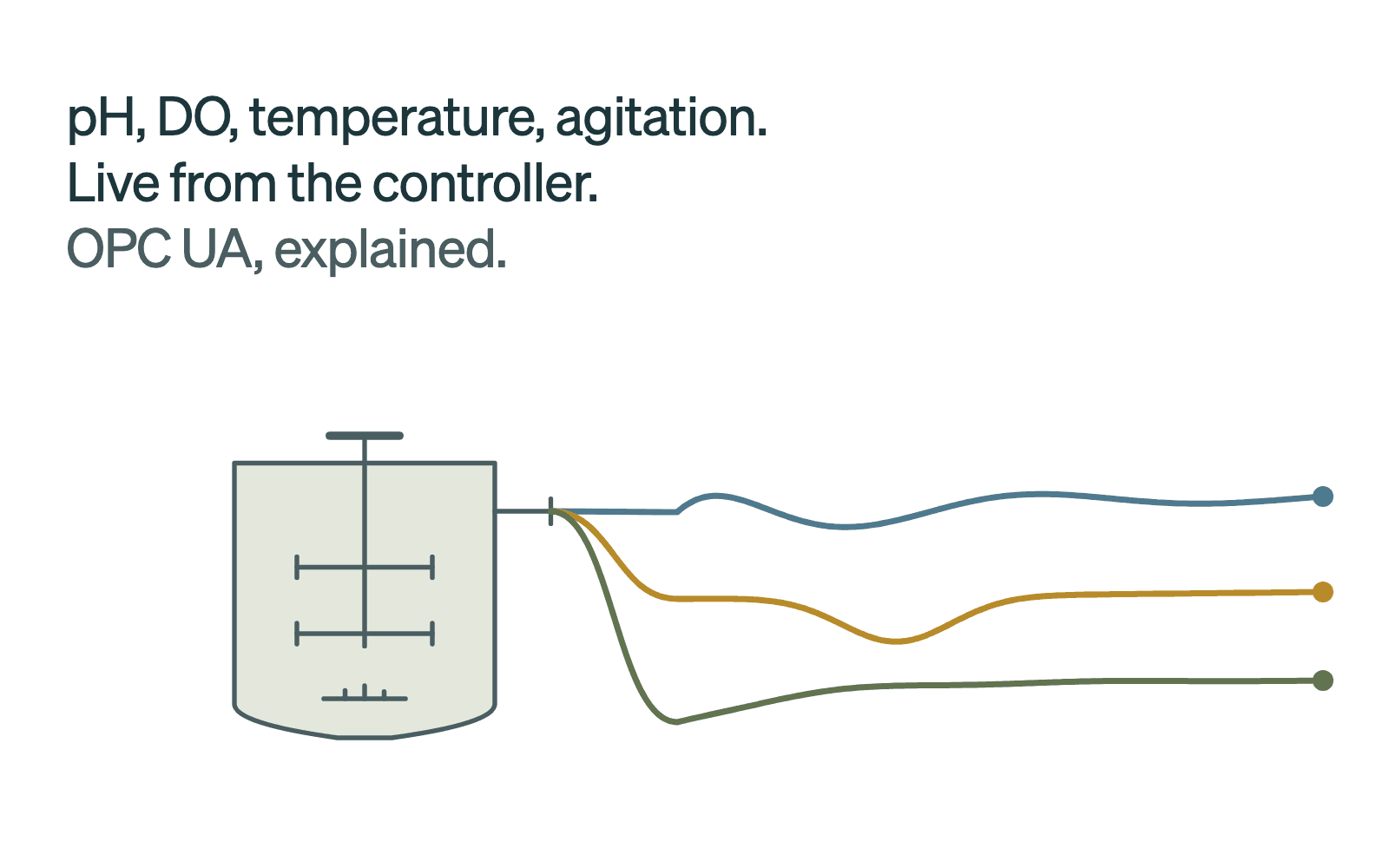
Invert is bioprocess data and AI software for development and manufacturing teams. Edge connectors installed on site stream data from historians such as AVEVA PI and from bioreactor systems that use the OPC UA or OPC DA data standards, and a Benchling connector brings in ELN context. Assist, Invert's AI analyst, searches runs, runs Python analyses, and writes the results into shareable reports that keep the code.
Teams can capture a method once as a Skill and run it on a schedule. Assist can draft data mappings and correct data, and each import is previewed and approved before it lands. In a published case study, a clinical-stage cell therapy company connected five bioreactor systems across two sites and cut batch analysis prep from days to near real time.
The Direction of AI in Biomanufacturing
Several tools on this list now connect to live process data.
As companies explore digital twins and more automated tech transfer, AI is likely to take on more of the analysis that connects development work with commercial scale.
That depends on data that is unified and contextualized. Tools that only visualize data will likely matter less than tools that help interpret it, as long as people can check the reasoning.
What to Look for When Evaluating AI Platforms
When choosing an AI tool for bioprocessing, look past surface-level analytics or automation claims. Ask these questions:
- Which bioreactors, historians, and lab systems does it connect to today, and what needs custom work?
- How does it harmonize and contextualize data, and can you review changes before they land?
- Can you see how the AI reached a result, such as the code behind it?
- What does implementation involve, including IT time, and when will you see a first useful result?
- How does it support your compliance requirements, such as audit trails and electronic signatures?
The answers show which tools will fit your process as it grows, and which may become limits.
Building the Future of Bioprocess Intelligence
The future of biomanufacturing depends on data that is both trusted and current. AI does the analysis, but unified data is what it works on.
Many teams still join run data by hand in Excel. Teams that make progress usually rebuild their data infrastructure first, around connected platforms that help scientists, engineers, and quality teams work from the same record.
That is the vision of Invert: to close the gap between data and decision, and help biopharma move therapies to market faster and with more confidence.