Bioprocess scale-up is no longer constrained by biological understanding alone — it’s constrained by fragmented data, slow insight cycles, and tools that simply weren’t designed for the realities of upstream, downstream, and CDMO collaboration.
As pharma, biologics manufacturers, and bioproduction startups adopt AI-driven process development, three platforms frequently enter the evaluation process:
- Bioraptor — a general scientific data platform
- Genedata — a legacy enterprise informatics suite
- Invert — purpose-built Bioprocess AI Software
Each claims to support bioprocess optimization, but their architectures — and their suitability for real-world scale-up — vary dramatically.
This comparison focuses on the capabilities that matter most for teams trying to accelerate bioprocess development: data unification, real-time visibility, reproducibility, automation, and AI-ready intelligence.
Executive Summary: What Actually Accelerates Scale-Up?
From conversations with scientists, MSAT leaders, and manufacturing executives, four capabilities consistently determine scale-up performance:
- Unified, harmonized, contextualized bioprocess data — across USP, DSP, and CDMOs
- Real-time visibility into live runs — so deviations are caught early, not after the batch
- An intelligence layer built on trusted data — analytics, visualization, and transparent AI
- Automation that eliminates manual data cleanup
These capabilities define whether scale-up is predictable or painful.
And only one platform was built specifically for them.
Platform Overview
Bioraptor
A general-purpose scientific data platform designed for flexible data modeling and ML workflows. Strong in R&D but not purpose-built for bioprocess time-series data or manufacturing-scale environments.
Genedata
A long-standing enterprise informatics system with broad scientific coverage. Mature but heavy, slow to deploy, and not inherently suited for real-time bioprocess data or modern AI-driven analytics.
Invert (Purpose-Built for Bioprocess AI)
Invert is the only bioprocess-first software platform designed specifically to unify, harmonize, and contextualize high-density time-series data in real time, with analytics and transparent AI built in.
Comparison: Invert vs. Bioraptor vs. Genedata
When bioprocess teams evaluate these three platforms, the biggest differences become clear almost immediately.
Invert stands apart because it was purpose-built for bioprocessing. It natively ingests high-density time-series data across upstream, downstream, and CDMO environments, and immediately harmonizes and contextualizes it. Real-time visibility into runs, automated data cleanup, and a built-in intelligence layer — including visualization, analytics, and transparent AI — are central to the architecture. Deployment typically takes hours, and the software meets enterprise-grade compliance requirements such as 21 CFR Part 11 and GxP. Invert is engineered explicitly for scale-up, tech transfer, and process comparability.
Bioraptor, in contrast, is a broad scientific data platform. While it offers flexible data ingestion and supports machine learning workflows, it is not designed around bioprocess-specific needs. It lacks native support for ingesting real-time bioreactor data and does not automatically harmonize upstream–downstream datasets. Teams often rely on external analytics tools or custom pipelines, which slows insights and creates fragility — especially in scale-up or manufacturing environments. Bioraptor excels in data science labs, but it is not engineered for bioprocess scale-up.
Genedata brings mature enterprise capabilities, but its legacy architecture makes it rigid and slow to implement. Organizations typically require months of customization to adapt it to bioprocess workflows, and real-time ingestion of high-density time-series data requires additional systems. Its analytics modules are largely reporting-oriented rather than built for active process interrogation or AI-driven decision support. The total cost of ownership is high, and its architecture is not optimized for fast-moving scale-up teams.
Ultimately, the platforms differ in focus:
- Invert is designed for the complexity of bioprocess scale-up and manufacturing.
- Bioraptor is built for general scientific data and ML experimentation.
- Genedata is a broad, legacy informatics system requiring heavy customization.
Across the dimensions that matter most — unified data, real-time visibility, harmonization, built-in intelligence, and deployment speed — only Invert delivers all capabilities natively, without bolt-on modules or custom engineering.
Where Bioraptor Falls Short for Scale-Up
Bioraptor is popular with data science teams, but it is not optimized for bioprocess engineering or manufacturing.
- It lacks native models for bioreactor time-series data and DSP traces.
- It does not harmonize USP/DSP/CDMO datasets automatically.
- Real-time monitoring capabilities are limited, making mid-run interventions difficult.
- Insights frequently depend on custom scripts or external tools, slowing decision-making.
Bioraptor fits R&D environments well — but scale-up and tech transfer require purpose-built data infrastructure, not generic scientific tooling.
Where Genedata Struggles in Modern AI-Driven Bioprocessing
Genedata has long served large pharma organizations, but today’s AI-driven bioprocessing needs have outpaced its legacy architecture.
- Implementations often span many months and require specialized administrators.
- Native support for high-frequency bioprocess time-series data is limited.
- Most analytics live outside the platform, leading to brittle integrations.
- Heavy customization creates significant long-term IT overhead.
For teams seeking agility, rapid iteration, and real-time visibility, Genedata often slows progress rather than enabling it.
Why Bioprocess Experts Choose Invert
Invert combines decades of bioprocess experience with world-class software engineering — and that dual expertise shows up in every part of the platform.
1. Purpose-Built, Not Retrofitted
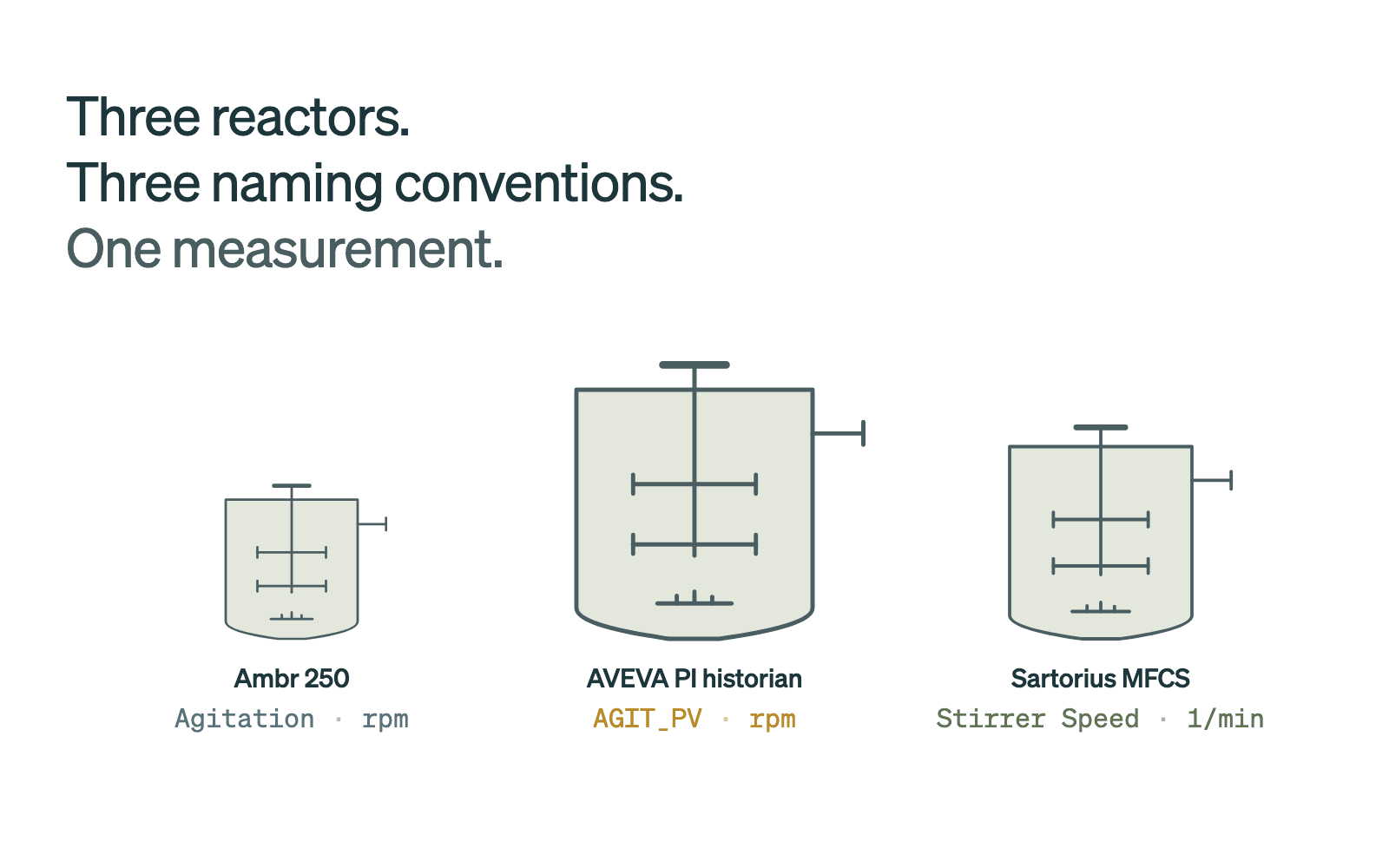
Invert is engineered specifically for USP, DSP, and scale-up. Rather than retrofitting generic or legacy tools, Invert was designed from the ground up around bioprocess realities — high-density time-series data, batch variability, CDMO collaboration, and the need for instant comparability.
2. A Trusted, AI-Ready Data Foundation
Invert continuously unifies, harmonizes, and contextualizes fragmented data sources in real time, creating reliable, reproducible, and compliant datasets. This foundation makes bioprocess data immediately actionable and AI-ready.
3. Intelligence Layer Built In
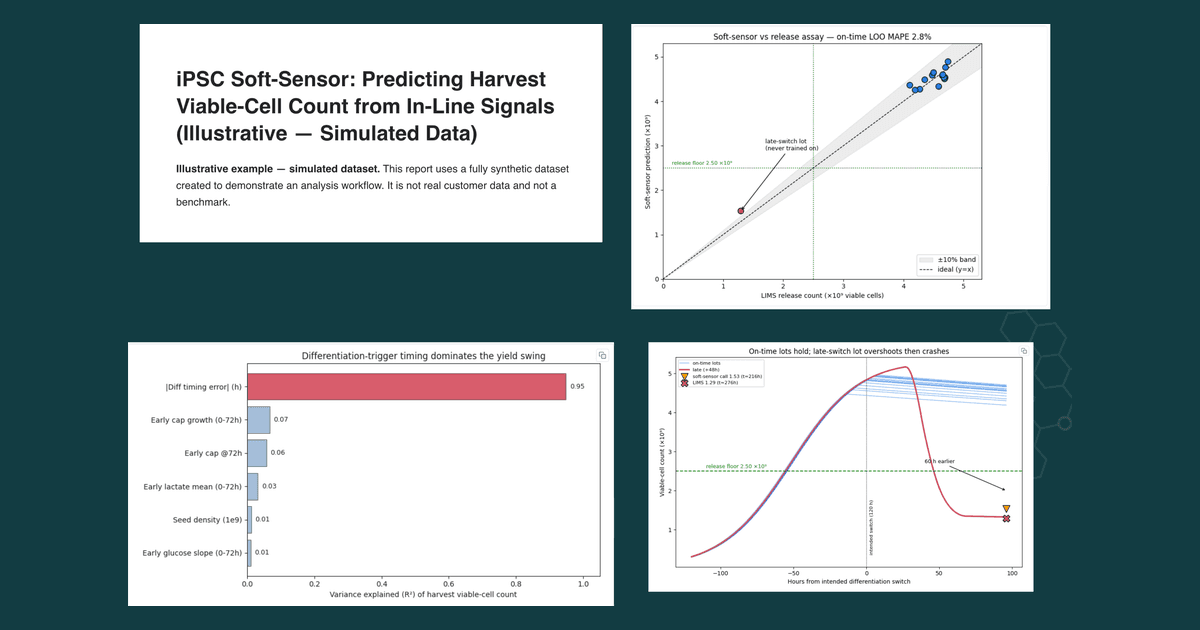
Unlike platforms that stop at storage, Invert includes built-in visualization, analytics, and a transparent AI interface that helps teams interrogate their data directly — without exporting files or relying on brittle pipelines.
4. Real-Time Visibility Across USP, DSP, and CDMOs
Teams monitor experiments as they run, detect deviations early, and prevent wasted batches — accelerating development and improving scale-up reliability.
5. Fast, Low-Risk Deployment
With prebuilt integrations for bioreactors and DSP systems, Invert connects in hours and delivers immediate value without heavy IT lift.
Which Platform Accelerates Scale-Up Fastest?
Across the metrics that matter — time to insight, reproducibility, AI-readiness, and scale-up predictability — Invert consistently outperforms Bioraptor and Genedata for bioprocess applications.
For:
- Pharma manufacturers needing predictability and compliance
- Scientists needing harmonized, real-time data
- Startups needing enterprise-grade capabilities without enterprise overhead
- MS&T and digital leaders needing validated data pipelines without brittle integrations
Invert delivers the fastest path to scale-up readiness — because it was purpose-built for it.
See Why Bioprocess Experts Choose Invert
Invert is the Bioprocess AI Software built specifically to transform fragmented bioprocess data into faster insights and more confident decisions. With a unified data foundation, real-time visibility, and an intelligence layer built in, Invert helps teams accelerate development, reduce risk, and scale with confidence.
Purpose-built, not retrofitted. Engineered for scale-up. Proven across pharma and advanced bioproduction.