In modern biomanufacturing, success hinges on being able to make informed decisions fast. The ability to analyze data directly impacts productivity, product quality, and ultimately, time to market, whether you're optimizing a fed-batch fermentation, troubleshooting a chromatography run, or validating a filtration process.
The Challenge of Real-Time Time Series Data in Bioprocess
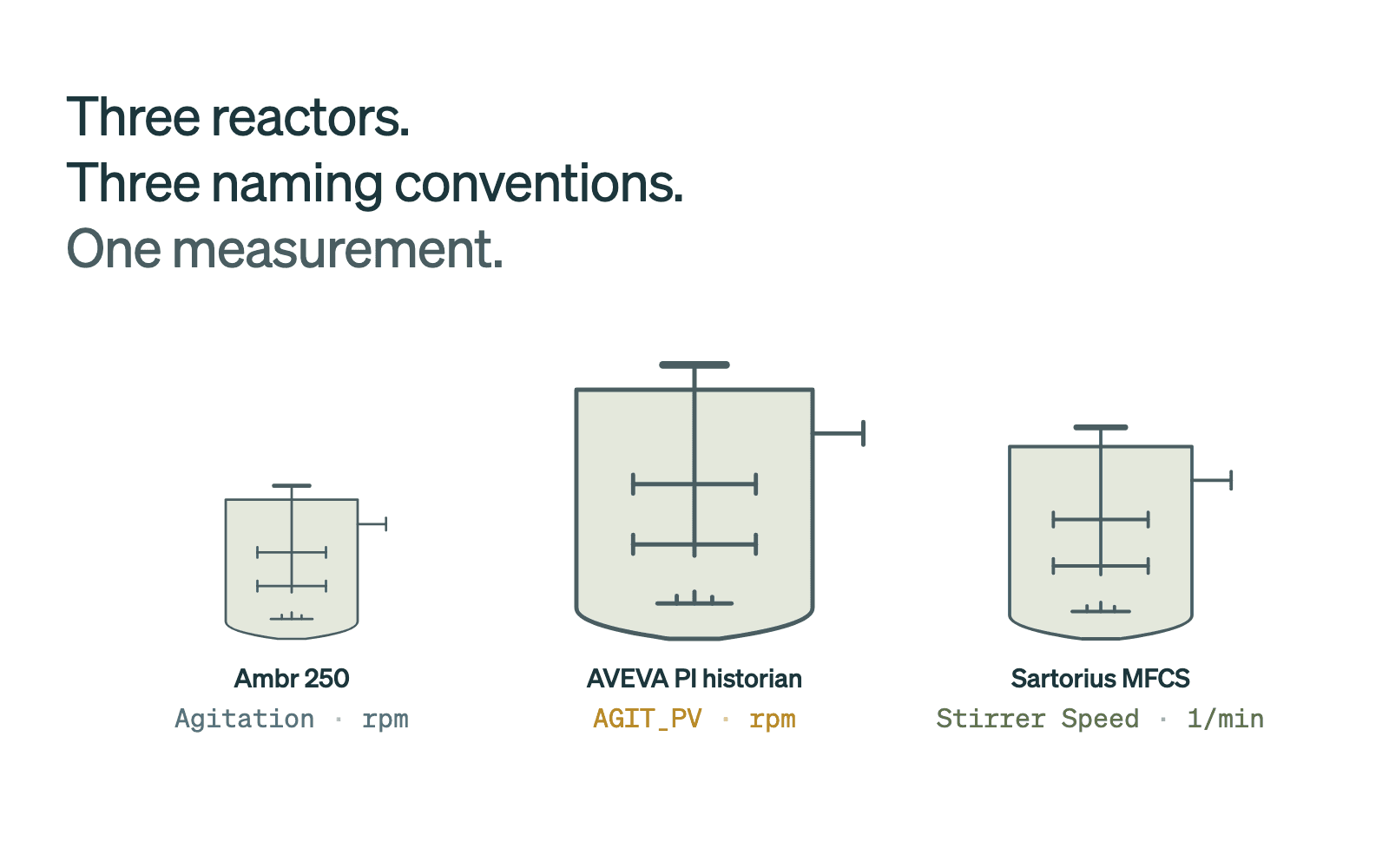
The massive volume, high dimensionality, and low latency of time series data in bioprocess make it especially unique and challenging to capture, manage, and analyze. Bioprocess equipment such as bioreactors, chromatography systems, and filtration units generate complex time series datasets, with facilities capturing millions of individual data points every day. Each sensor streams pH fluctuations, dissolved oxygen levels, pressure differentials, flow rates, among hundreds of other parameters in real time. Traditional approaches to data analysis often involve:
- Exporting data to spreadsheets after a run completes
- Manual calculations and plotting
- Waiting hours or days for trend analysis
- Retrieving siloed data across different systems and departments
This reactive approach means critical process deviations may go unnoticed until it's too late, forcing costly batch rejections or suboptimal yields.
What sets Invert’s ability to analyze time series data apart?
Invert was not only built with this capability to capture real time time series data from ongoing runs at its core, but is also makes bioprocess data easy to interpret and analyze instantly across all scales of production. Features that set it apart include:
Unified view of bioprocess data
Invert centralizes data across upstream and downstream unit operations, from fermentation to purification. Offline and at-line data from analytical instruments is also integrated and automatically connected to relevant timepoints, allowing users to have full experimental context when interpreting results. This surfaces correlations that would otherwise be invisible when analyzing systems in isolation.
Real-time statistical process control
Instead of waiting for post-run analysis, users can monitor control charts and statistical trends as batches progress in Invert. If any parameter drifts out of spec, they can intervene early to keep processes within validated ranges. When combined with Invert Alerts, users can receive instant notifications when that occurs, so they can act quickly without constant manual oversight.
Compliant with industry regulations
Invert maintains full audit trails and 21 CFR Part 11 compliance, as required in GxP manufacturing for regulated environments such as biopharma and biotech.
Practical Applications
Bioreactors:
- Track cell growth kinetics, substrate consumption, and metabolite production throughout the process
- Identify the optimal feeding strategy or media composition by analyzing correlations between different feed or growth rates and productivity markers in real time
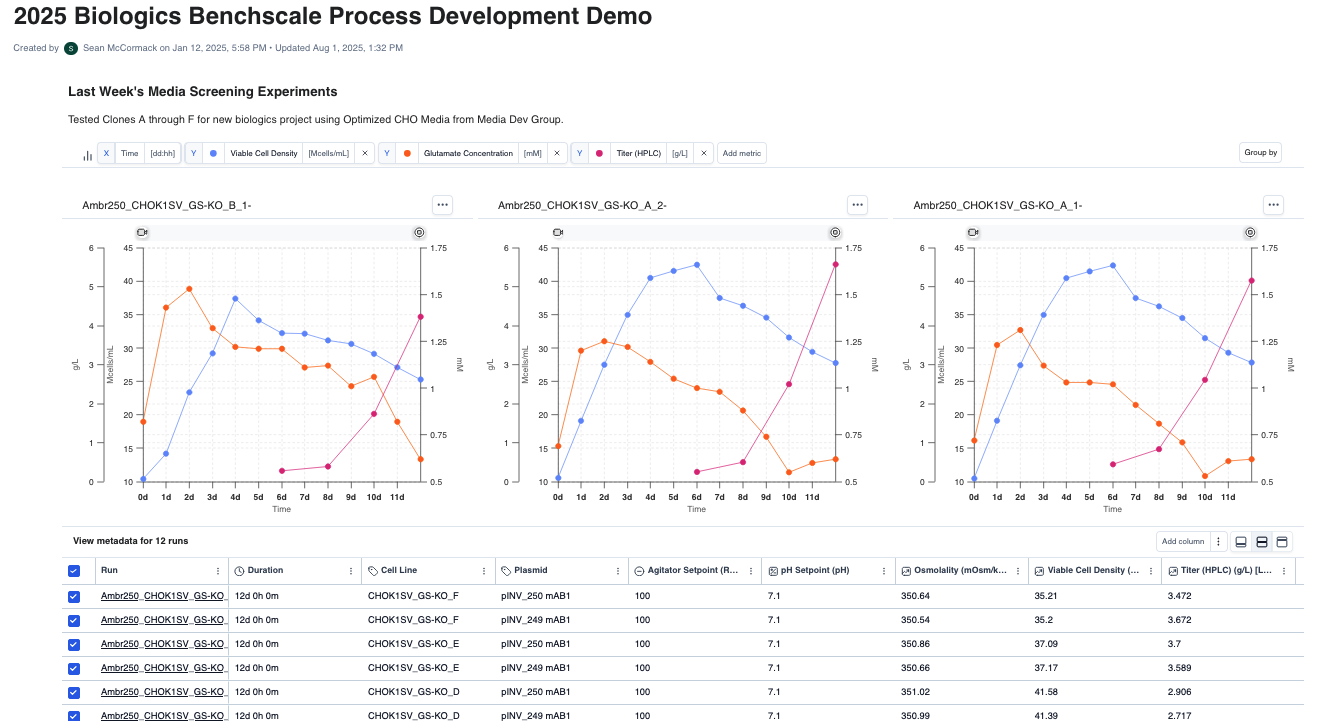
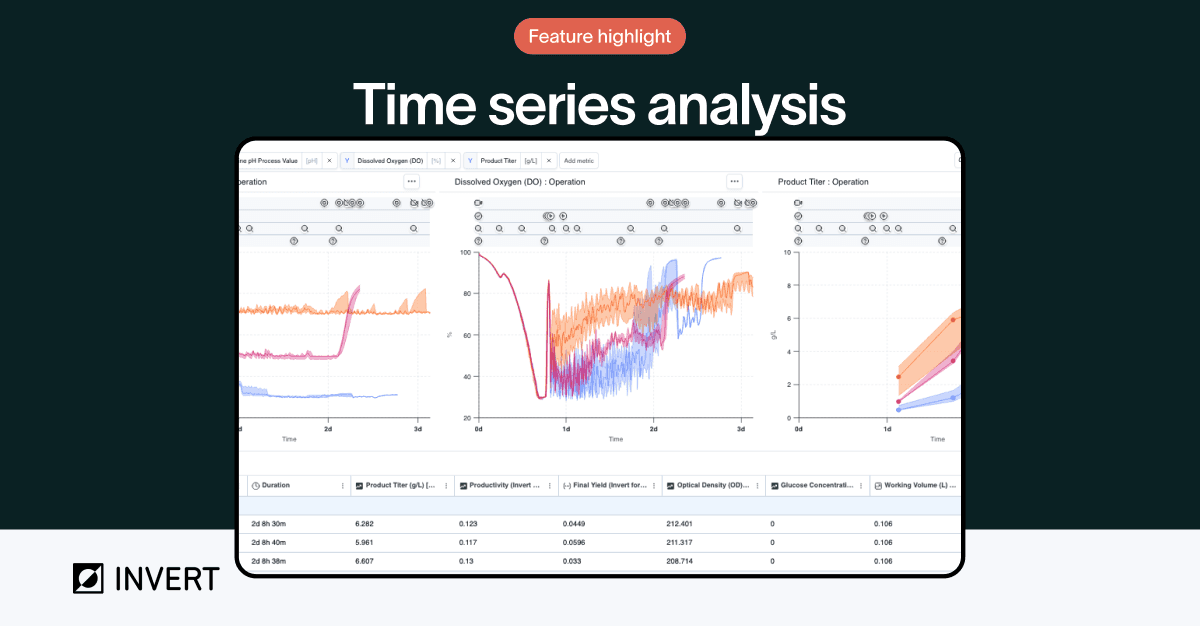
Visualize product titers, viable cell density, and feed profiles in Invert with a few clicks to compare performance between different clones
Chromatography:
- Overlay current runs against historical golden batches.
- Detect column fouling early by analyzing pressure trends
- Optimize pooling decisions by monitoring UV absorbance patterns
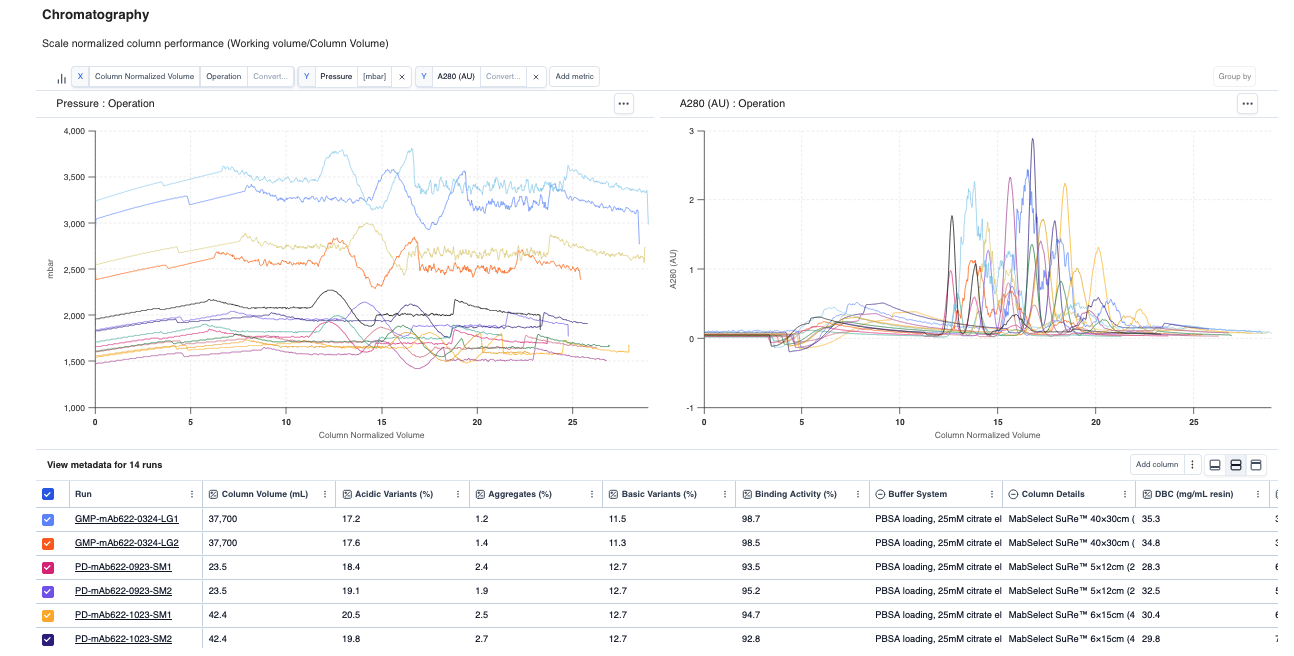
Invert automatically generates visualizations of scale-normalized column performance for chromatography data
Filtration
- Predict membrane lifetime by monitoring flux decline rates and calculating area-under-curve metrics automatically
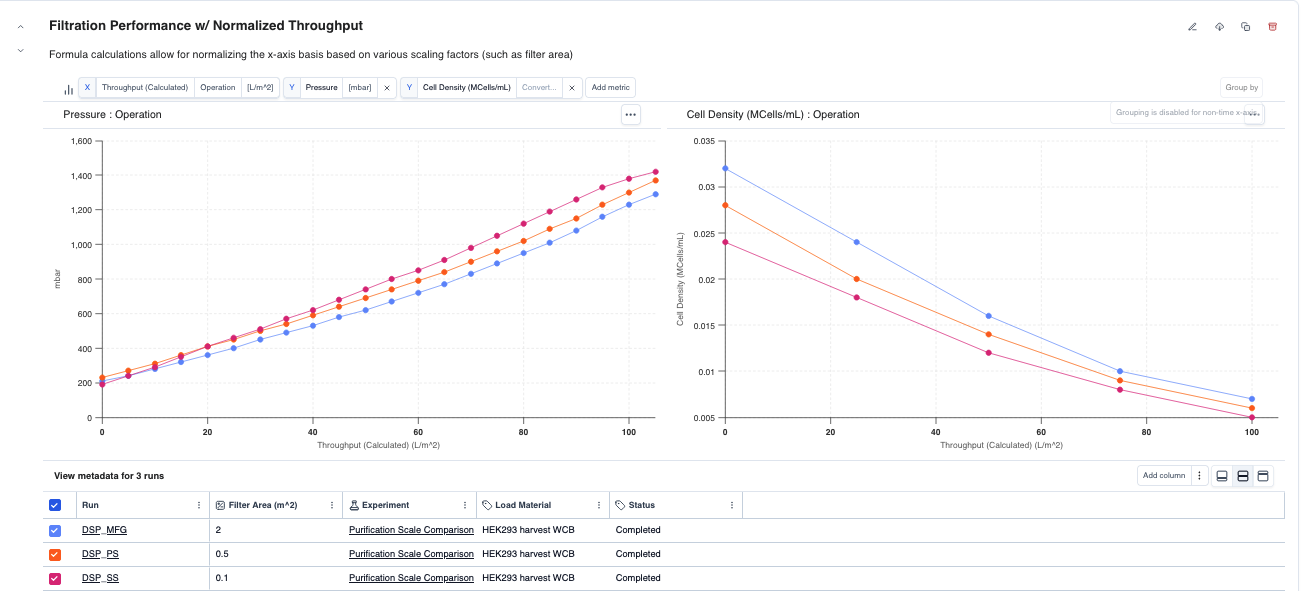
Invert automatically generates scale-normalized visualizations of filter performance across various scaling factors such as filter area
Fast time series analysis enables proactive, decisive action
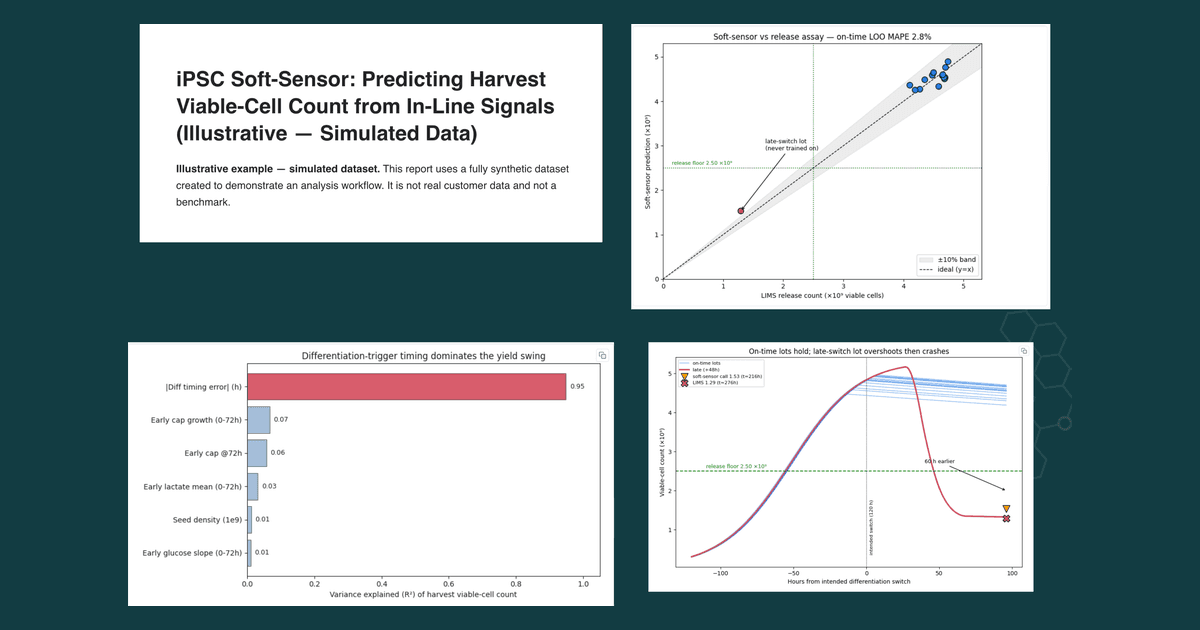
The ability to analyze time series data quickly is a major determinant of success in bioprocess. When a single batch can be worth millions of dollars and patient lives depend on consistent product quality and availability, efficiency is paramount. Invert transforms users from observers into decision-makers, empowering them to take control of process outcomes and ensure that life-saving therapeutics are available to those who need them.